







Search Results for: politely asked to leave

New Developments in Starbucks Store Seating Management: Non-Purchasing Customers May Face Polite Requests to Leave, Sparking Controversy Over the "Third Place" Positioning
Starbucks has long positioned itself around the "third space" concept, offering customers a place to study, work, and socialize. However, as the phenomenon of occupying seats without making a purchase becomes increasingly common, many paying members report that store seating is taken up by non-consumers, greatly diminishing their experience. Recently, some netizens revealed that certain stores have begun "politely asking" non-purchasing customers to leave, requiring anyone who sits down to place an order, sparking widespread discussion. Supporters argue this helps maintain operational order, while opponents worry it damages the brand image. Starbucks customer service responded that all stores welcome customers to sit, regardless of whether they make a purchase. How will this debate over the boundaries of the "third space" ultimately affect Starbucks' future direction? [more…]
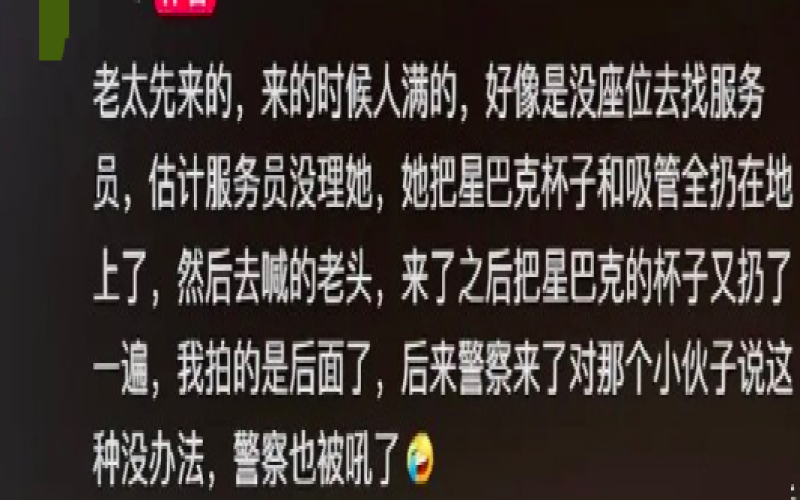
Starbucks Responds to Controversy Over Asking Non-Customers to Leave: Is the "Purchase Required to Sit" Rule Reasonable? Heated Debate Ensues
Recently, videos of altercations between Starbucks staff and non-paying customers have surfaced one after another on social media, drawing widespread attention. On one side, an elderly person argued with staff after being asked to leave for not making a purchase; on the other, a store in Xi'an was accused of frequently shooing away passersby who hadn't bought anything. Starbucks customer service responded that stores do indeed have a "purchase to be seated" rule, but they won't force customers to buy. Behind this new rule lies the real dilemma of store environments being affected by people who occupy seats without spending, and it also reflects the discussion about the boundary between commercial premises and public space. As a coffee enthusiast, what do you think of Starbucks' approach? [more…]

Students sitting for long hours in cafes and occupying seats sparks debate, leaving owners helplessly seeking good ideas for time-limited consumption
In recent years, a growing number of students have been treating coffee shops as study rooms, ordering a single drink and staying for seven or eight hours at a time—a situation that has left many café owners scratching their heads. Faced with the dual pressures of declining table turnover and rising operating costs, owners must both protect their reputation and find effective management strategies. On social media, discussions about how to politely encourage long-staying customers to leave are heating up. Some suggest posting time-limit notices, others choose to adjust the ambiance or require refills, and some shops have borrowed from Hong Kong's practice of implementing a two-hour seating limit. This tug-of-war over café space usage and consumer rights reflects the real dilemmas facing the food and beverage industry today. [more…]
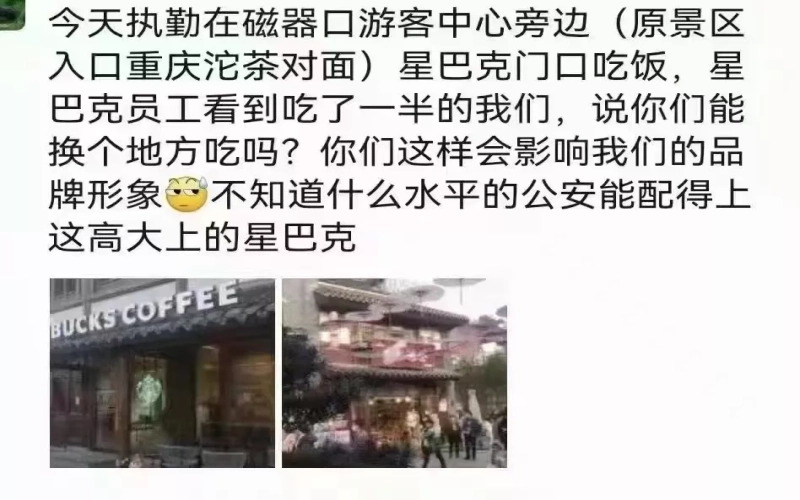
Starbucks Store Sparks Public Outrage After Asking On-Duty Police Officers to Leave: Brand Image and Service Spirit Face Dual Scrutiny
Recently, an incident in the ancient town of Ciqikou in Chongqing sparked widespread discussion: on-duty police officers were asked to leave by staff while eating at outdoor tables and chairs outside a Starbucks store, on the grounds of "affecting the brand image," and were subsequently complained about. The incident quickly fermented online, with netizens questioning whether Starbucks' actions were appropriate. At the same time, an internet influencer cited the so-called "Internal Affairs Regulations of the People's Police of Public Security Organs" to question the officers' behavior, but it was found that the cited content was actually pieced together from another regulation. Starbucks customer service responded that they are verifying the matter and will discipline the employees involved if it is true. This is not the first time Starbucks has been mired in controversy for driving away police; similar incidents have occurred previously at stores in the United States and at Songshan Wanda in China. This article takes you through the full picture of the incident and the voices of all parties. [more…]
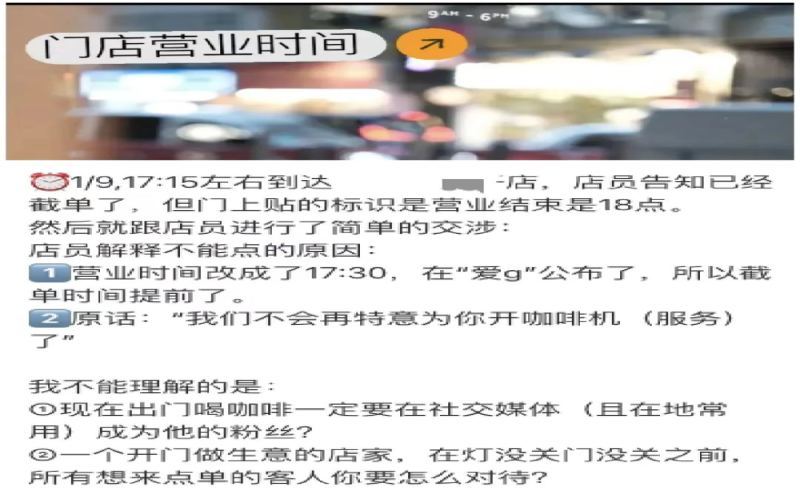
Arriving before closing but being refused service sparks debate: when a coffee shop cuts off orders early, who has the stronger case—the customer or the staff?
Near closing time, the coffee machine has already been cleaned, and at that moment a customer walks in through the door asking if they can have a cup of coffee—such a scene is not uncommon in the coffee industry. Recently, some consumers have reported that they arrived at a coffee shop before the end of business hours to place an order but were refused, with staff saying that the store had already cut off orders early and that the coffee machine would not be turned back on after cleaning. The incident sparked heated discussion online: one side believes that customers should be served during business hours, while the other side sympathizes with coffee workers who do not want to work overtime. How should coffee shops balance service and operations? And how should similar situations be handled properly? This article compiles views from various parties for the reference of coffee enthusiasts. [more…]
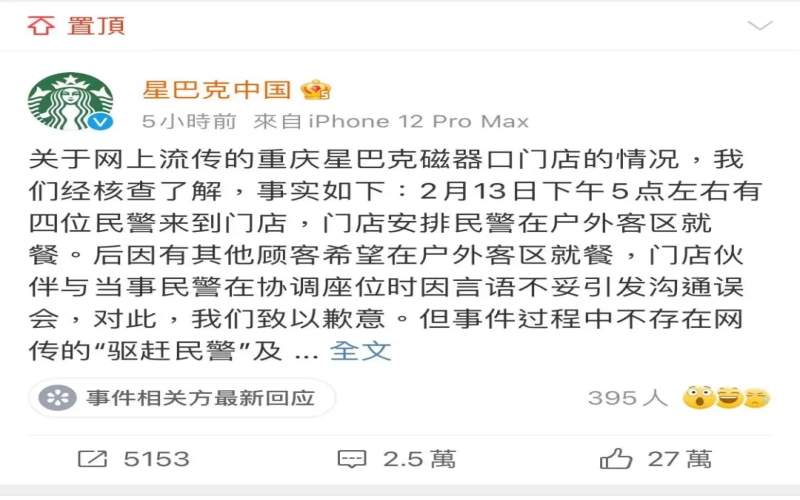
Starbucks apologizes over police dining controversy, says it was a communication misunderstanding and no one was driven away or complained about; netizens still skeptical.
Recently, news that police officers in Chongqing's Ciqikou Ancient Town were asked to leave while eating at the entrance of a Starbucks spread rapidly on social media, sparking widespread attention and trending on Weibo. Starbucks China later responded that the incident was a misunderstanding caused by inappropriate remarks during seat coordination, denying that it had asked the officers to leave or filed a complaint against them. However, this apology did not quell netizens' doubts, and related discussions continued to intensify. Meanwhile, reports said Starbucks customer service stated that if the incident was verified, the employees involved would be disciplined, and the local management committee had also intervened in the investigation. The incident also reminded people of a similar case involving Starbucks in the United States in 2019. As coffee lovers, we cannot help but wonder: how should cafes and community law enforcement officers coexist harmoniously? Front Street Coffee has always advocated the concept of community friendliness, paying attention to the warmth behind every cup of coffee. [more…]
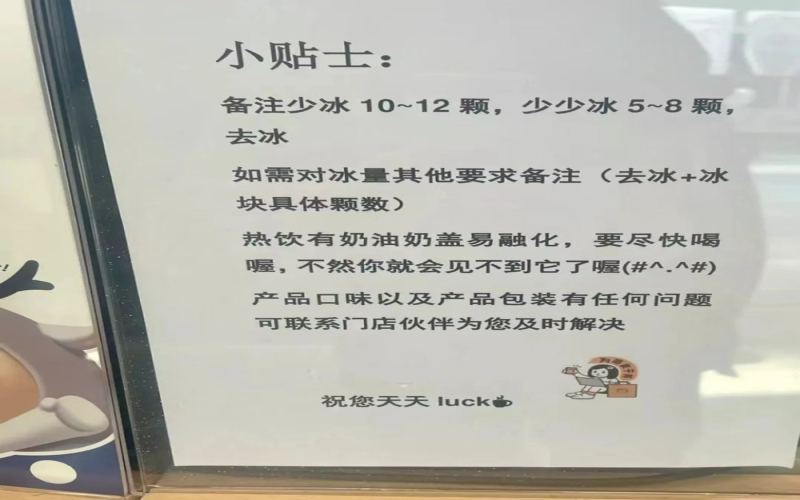
Luckin's ice-amount controversy keeps simmering: office workers pushed to the brink of breakdown by notes telling them to "count the ice cubes"
Luckin's cold drinks do not offer a "no ice" option, and the problem of excessive ice has repeatedly trended on social media. To get a drink that suits their taste, consumers have begun to "report" the exact number of ice cubes in the remarks section, and even make various demands about the shape and temperature of the ice, leaving store employees utterly exhausted. From "less ice, 10–12 cubes" to "two little heart-shaped ice cubes," and even "no ice but with a frosty feel," these bizarre remarks not only reflect consumers' obsession with ice levels but also push Luckin's workers into a dilemma where "whatever they do is wrong." This article compiles a large number of real order remarks, presenting this tug-of-war over ice cubes. [more…]
The correct way to drink coffee and etiquette details, plus how to find the cup that suits your personal taste
When you pick up a cup of hot coffee, do you casually blow on it to cool it, sip it with a coffee spoon, or alternate between a pastry in one hand and coffee in the other? These seemingly natural actions may be stepping right into the no-go zones of coffee etiquette. This article starts with details such as holding the cup, adding sugar, stirring, blowing to cool, and eating pastries, to sort out a proper way to enjoy coffee, and also discusses how to accommodate coffee lovers' habits when hosting guests at home or being a guest. The second half turns its gaze to flavor itself: from the bitterness of the first sip, to repeatedly searching for that cup of coffee that intoxicates you, and then to customizing a personal coffee step by step in a coffee shop, including options such as hot or iced, decaf, ESPRESSO dose, syrup, milk type, and personalized requests, with recommendations from Front Street Coffee attached. [more…]
From Bach to Van Gogh: amusing anecdotes and classic quotes from 15 Chinese and foreign celebrities obsessed with coffee
Since coffee was introduced to Europe, it has formed an indissoluble bond with countless literati, musicians, and philosophers. Balzac drank tens of thousands of cups of coffee while writing La Comédie Humaine, Beethoven insisted on using 60 beans per cup, and Voltaire downed 50 cups a day... These astonishing stories not only reflect the unique charm of coffee but also record little-known daily habits of famous figures. Front Street Coffee takes you through time and space to review the coffee obsessions and classic quotes of 15 famous names including Bach, Franklin, Kierkegaard, and Van Gogh, savoring the cultural anecdotes behind a cup of coffee. [more…]
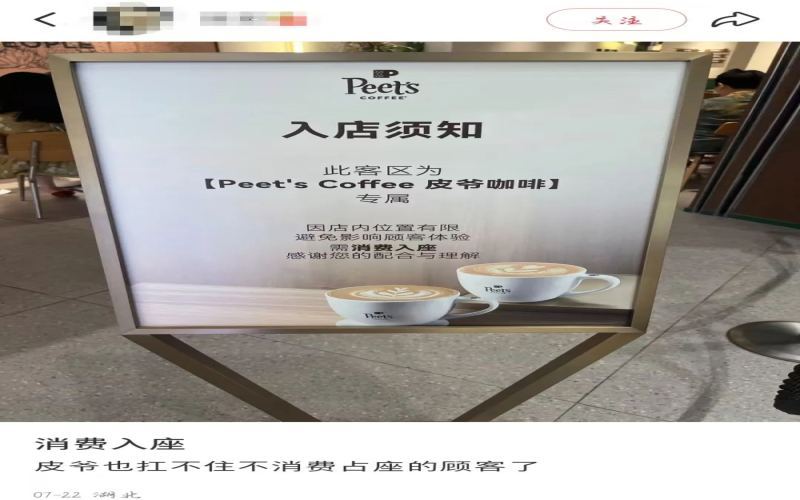
Peet's Coffee's implementation of a minimum purchase requirement for seating sparks debate: can chain brands use this to tackle seat-hogging?
Recently, a Peet's Coffee store in Wuhan placed a "Notice for Entry" at its entrance, explicitly requiring customers to make a purchase before they can be seated. This move quickly sparked widespread discussion among netizens. Many consumers expressed support, believing it can effectively curb uncivilized behaviors such as occupying seats for long periods without buying anything, playing cards, putting on makeup, or even livestreaming. Others questioned the notice's actual enforceability. Previously, Starbucks tried a similar policy, but the results were less than ideal. Whether Peet's move can truly improve the store environment and enhance the customer experience has become a focal point of attention in the coffee industry. [more…]

Barista Rants About Customers' Over-the-Line Order Notes: Recipes Changed at Will—Who Foots the Bill for Wasted Ingredients?
When ordering at a coffee shop, many customers are in the habit of writing personalized requests in the remarks section, from no ice or less ice to adjusting the number of syrup pumps, and these operations are still manageable for baristas. However, when the remarks escalate into requests to add extra ingredients outside the recipe, even down to precise milliliters and spoon counts, coffee workers find themselves in a dilemma. On the one hand, they worry that refusing will lead to a bad review; on the other, they face accountability pressure from material loss. This contradiction is especially prominent in chain brands with strict material controls. This article will take an in-depth look at the real dilemma behind this phenomenon and present the true voices of baristas. [more…]
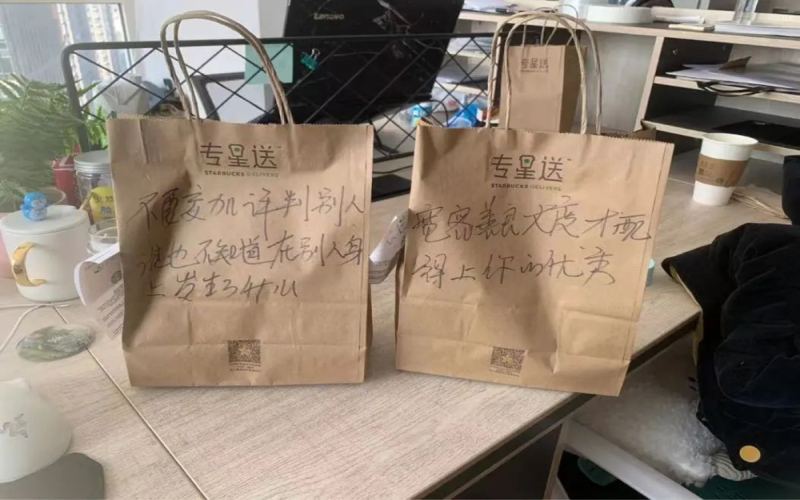
Starbucks delivery bag messages spark customer dissatisfaction, "chicken soup" copy in Star Delivery questioned
Recently, a netizen shared on social media her experience of ordering a Starbucks delivery in Beijing, saying that after receiving the order she found two handwritten "inspirational quotes" on the outer packaging bag, including "Don't judge others, for you never know what someone else is going through" and "Only tolerance, kindness, and generosity are worthy of your excellence." The netizen said she felt uncomfortable upon seeing these words, believing they carried a tone of accusation. She then contacted the store involved and was told that the words were meant as positive blessings and that the original intention was not to attack. After the incident continued to escalate, Starbucks customer service and the store involved both responded, acknowledging that the words were written by a staff member and expressing an apology. This incident has also sparked public discussion about the boundaries of communication between brands and customers, especially during a period of sensitive public opinion, and whether similar "dual-interpretation" copywriting may backfire. [more…]
Mandheling Flavor and Taste | What Is the Difference Between Indonesian Sumatra Mandheling Coffee and Colombian Coffee? Who Is PWN Golden Mandheling Suitable For?
Friends who know about Geisha coffee and Blue Mountain coffee will have some understanding of Colombian coffee, so do you know what differences exist between them? If not, today let's join Front Street to distinguish Sumatra Mandheling coffee and Colombian coffee. Whether in flavor or mouthfeel, the two [more…]
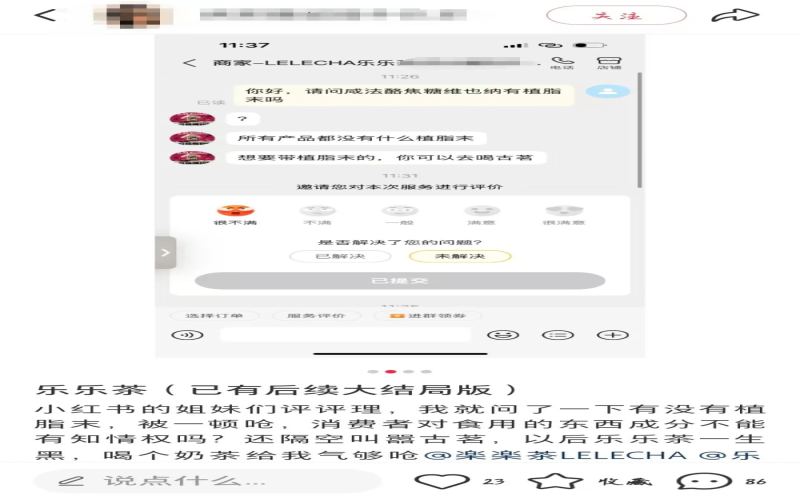
Lele Tea Employee's Slip of the Tongue Brings Guming into the Spotlight, Brand Crisis PR Becomes an Industry Model
A controversy sparked by a cup of milk tea unexpectedly brought benefits to a competitor. Recently, an employee at a Lelecha store, when responding to a customer's inquiry about non-dairy creamer, inadvertently used Guming as a comparison, which caused customer dissatisfaction and was exposed on social media. Lelecha officially apologized quickly and launched a compensation plan, one part of which offered a 50% discount to Guming employees, prompting netizens to say Guming "won without doing anything." How did this customer complaint turn into a positive case of brand PR? From rapid response to substantive compensation, Lelecha's handling won recognition from many consumers and was even praised as "something other brands could study for a hundred years." This article will recount the entire incident and analyze the PR wisdom and industry lessons within it. [more…]

How Is Indonesian Mandheling Different from Arabica? A Comprehensive Guide to the Flavor Characteristics of PWN Golden Mandheling
Friends new to coffee are often baffled by the word "Arabica" that appears so frequently on packaging, while those who prefer Mandheling may not be able to explain clearly just what its relationship to Arabica is. To answer this question, we must start with the two main forces of the Coffea genus—Arabica and Robusta. This article will sort through the differences in bean varieties, growing environments, and flavor expression, and further trace the origin of the name Mandheling, the changes in producing regions, and the shifts in bean varieties, while also presenting Front Street Coffee's PWN Golden Mandheling authenticity identification methods and brewing parameters, to help coffee lovers understand this Indonesian classic clearly. [more…]
Want to become a professional barista? First, understand the skills and commitment this career requires.
Many people envy baristas for being able to taste all kinds of coffee, operate expensive equipment, and even experiment with different drinks, but this profession is far from as easy as it looks on the surface. To become a qualified barista, you not only need solid coffee knowledge, but also have to go through systematic training and become familiar with every aspect of store operations. From tasting extensively to ensure consistent quality, to handling multiple tasks at once and coordinating seamlessly with the team, to the physical wear and tear caused by standing for long hours and repetitive movements, as well as the tedious cleaning work, each one is a required lesson. If you are also thinking of entering the industry, you might first take a look at this realistic portrayal to understand the dedication and persistence behind the glamour. [more…]

The History of Indonesian Coffee Development | Where Did Indonesian Mandheling Coffee Originate? Introduction to Mandheling Origins, Varieties, and Coffee Flavor Characteristics
Among Indonesian coffee beans, Mandheling coffee beans are the most famous. Mandheling coffee beans are the representative of Indonesian specialty coffee and also the representative of Asian coffee, with a distinct Asian coffee style: pine, herbal, nutty, and caramel notes, with a very full-bodied mouthfeel and a solid, lasting finish. Precisely because of this, this kind of coffee flavor is not for everyone. [more…]

A Barista's Daily Record: Those Moments with Customers That Leave the Person Behind the Counter Not Knowing Whether to Laugh or Cry
Having been immersed in the coffee industry for many years, the author is both a barista behind the counter and an observer on social media. Over these years, consumers have gone from knowing nothing about coffee to becoming increasingly particular, and the industry has indeed made progress. However, dealing with all kinds of customers every day, one always encounters some both amusing and exasperating moves—from "an Americano with milk" to bringing one's own water quality testing pen, from cupping spoons to TDS concentration meters. These moments not only test a barista's professional competence but also reflect the various misunderstandings in the process of coffee culture becoming widespread. This article records seven real-life scenarios with escalating shock levels, and after each story provides professional analysis and suggested responses. Whether you are a practitioner or an enthusiast, you can see both the absurdity and the reality of the coffee world in them. [more…]

What does a barista actually do every day? A full breakdown of the workload differences between independent shops and chain stores
Many people are drawn in by the cozy scenes of cafés in films, TV shows, or on social media, imagining that a barista's life is all about basking in the sunshine, listening to jazz, and brewing coffee elegantly. Yet the real profession of a barista is far from that romantic. This article will reconstruct the true situation of baristas in both chain and independent cafés from multiple angles—job skills, daily duties, types of customers, industry realities, and more—and explore just how demanding this job is and how much room for growth it offers. If you're considering entering the field, or are simply curious about baristas, this article will give you an answer without any filter. [more…]
A Detailed Guide to Indonesian Mandheling Coffee Varieties: Differences Between Golden Mandheling and Lintong Mandheling and Their Brewing Comparison
Mandheling coffee is deeply favored by coffee enthusiasts for its unique spice and herbal notes and its full-bodied mouthfeel. Front Street Coffee currently offers five Mandheling coffee beans in-store, among which Golden Mandheling is the most popular. This article will guide you through the origin of the name Indonesian Mandheling coffee, its producing regions, varietal differences, and the wet-hulling processing method, with a key comparison of the flavor characteristics and brewing parameters of PWN Golden Mandheling versus Lintong Mandheling. Whether you are a beginner just getting to know Mandheling or a seasoned coffee lover, you will find practical reference information here. [more…]